

Tibetan Uber Driver Dies After Setting Himself on Fire Outside U.N. Headquarters in New York
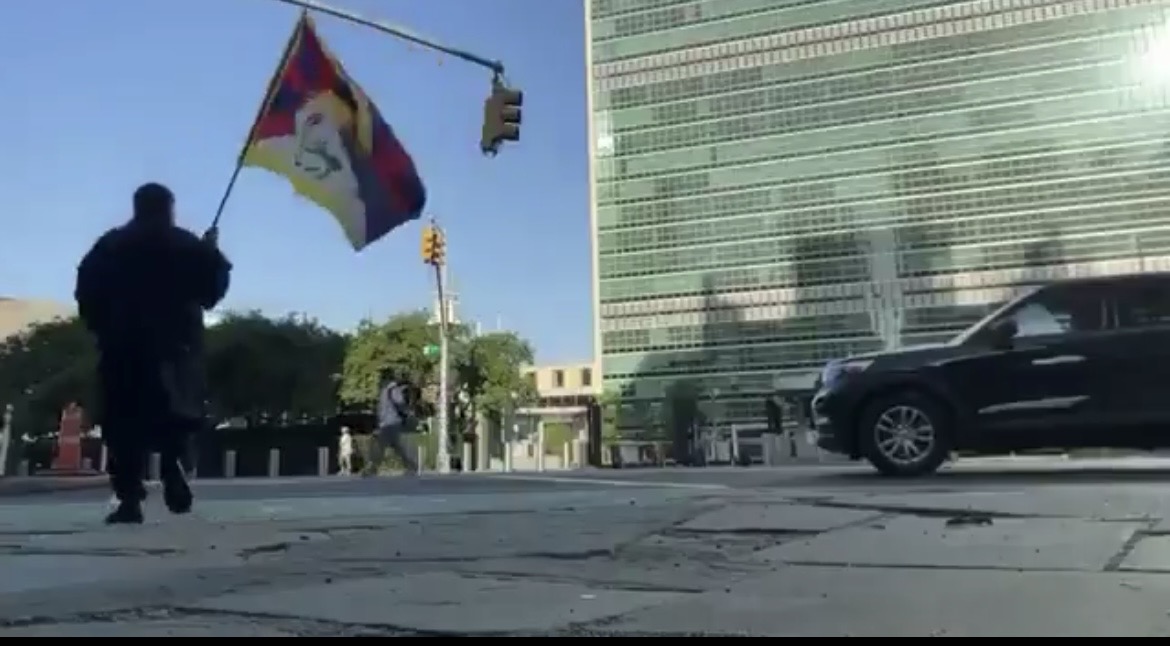
NEW YORK- A Tibetan man working as an Uber driver in New York City died after setting himself on fire outside the United Nations headquarters in Manhattan in a dramatic political protest. The incident happened near First Avenue and East 43rd Street, where he placed a Tibetan flag on the ground before igniting himself.
Emergency responders reached him within seconds and transported him to Bellevue Hospital, where he was later pronounced dead. Papers found at the scene carried messages demanding freedom for Tibet and criticizing China’s treatment of ethnic minorities.
The man was identified by Tibetan community members as Lobga (Lobsang) Rangzen, who had lived in the United States for nearly two decades. Before the act, he recorded videos speaking about the suffering of Tibetans under Chinese rule and urging people to continue advocating for Tibetan identity and freedom.
His protest came one day after China’s new “Ethnic Unity and Progress Law” took effect. Tibetan and Uyghur communities say the law forces assimilation, weakens cultural identity, and increases pressure on minority groups. Human‑rights organizations have raised concerns that the law could further restrict religious practices and language rights in Tibetan regions.
Self‑immolation has been used by Tibetans as a form of political protest for more than a decade. Advocacy groups say over 150 Tibetans have self‑immolated since 2009 to oppose Chinese rule. Rangzen’s act is the first known case to occur directly outside the United Nations building.
As of this publication, Uber has not released any official public statement regarding the incident. Media reports only confirm that Rangzen worked as an Uber driver.
A fellow Tibetan Uber driver, Lobsang Paljor, spoke to reporters and described Rangzen as a peaceful, dedicated man who was deeply affected by China’s restrictions on Tibetans. Paljor said the community was shocked and heartbroken by the news.
Uber has not responded to requests for comment, and no corporate spokesperson has issued a statement.
Buddhist communities across the U.S., Nepal, and India responded with compassion and reflection:
• Some Buddhist teachers called the act a “tragic sacrifice born from deep suffering.”
• Others reminded followers that Buddhism teaches non‑harm, urging activists to seek peaceful methods of resistance.
Sherpa TikTok creator Mr. Gimmy Sherpa also shared his reaction on Facebook. He asked people to pray for Rangzen’s soul and expressed sympathy for the family. However, he strongly stated that self‑immolation is not the right way to protest.
Mr. Ginny Sherpa wrote that leaving behind family and children in such a painful way creates more suffering. He said there are better ways to protect culture and identity, including dialogue, peaceful activism, and community unity. His message reflects the view held by many Sherpas: deep compassion for the victim, but disagreement with the method of protest.
peaceful action are better ways to protect culture and community.
Sherpa community member Mr. Nima Sherpa from Connecticut also shared his reaction, saying that self‑immolation is wrong and deeply against Buddhist teachings. He explained that as a Buddhist, suicide is not part of the Buddha’s teaching, and harming oneself cannot bring peace or positive change.
Mr. Sherpa said that in all past cases of self‑immolation, none of the individuals achieved their goals. “They aim to raise awareness, to send a message, but it has no effect whatsoever on the actual issue. And this latest case will be no different,” he said.
He added that Sherpa Buddhism teaches peace, love, non‑harm, and compassion, and that setting oneself on fire in front of children and the public creates trauma for the witnesses, especially young people who may carry the memory like a “horror show” for life.
Mr. Sherpa also urged Tibetan leaders, including His Holiness the Dalai Lama, to speak out and encourage people to stop such acts and instead choose dialogue, peaceful discussion, and unity. He emphasized that the family of the man who died especially his children will suffer deeply, and the community who witnessed the event will also carry emotional scars.
“We must stop this and bring good dialogues,” he said, calling for peaceful solutions and protection of families, culture, and mental wellbeing.
Members of the Tibetan community in New York and abroad expressed deep sorrow and shock after learning of the self‑immolation outside the United Nations. Many described the act as a painful symbol of desperation under Chinese rule, while others urged for peaceful advocacy and dialogue instead of self‑harm.
Tibetan activists said the incident reflects the frustration and hopelessness felt by many exiled Tibetans who believe the world has ignored their struggle. Some called the act “a sacrifice for freedom,” while others said it shows the need for mental‑health support and compassion within the community.
Several Tibetan monks and scholars reminded followers that Buddhism teaches non‑violence and respect for life, and that true awareness must come through education, compassion, and unity, not through death. They encouraged Tibetans to continue raising their voices peacefully through art, culture, and dialogue.
Community leaders also expressed concern for the man’s family and children, saying they will face long‑term emotional pain. Many Tibetans joined prayer gatherings in New York and Dharamsala, India, to honor his memory while calling for an end to self‑immolation as protest.