

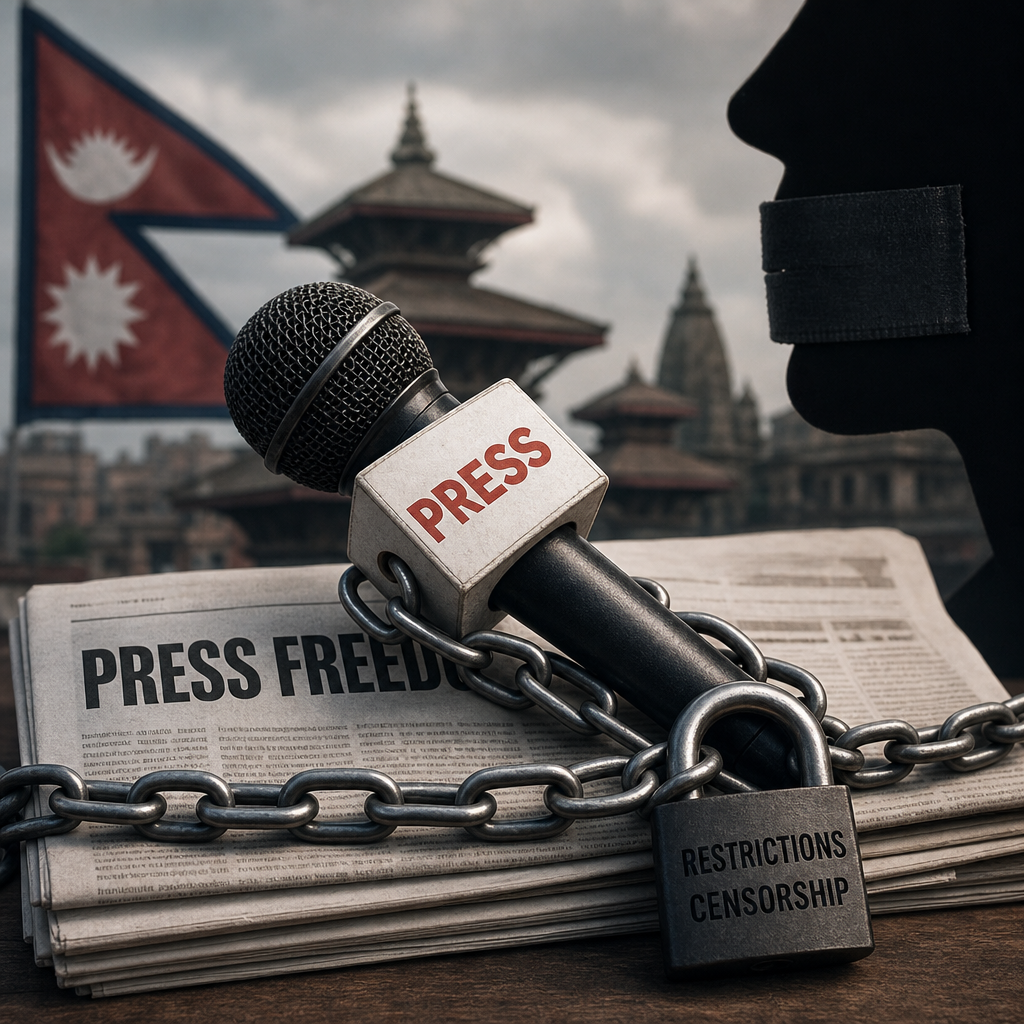
Balendra Shah Government Faces Scrutiny Over Press Freedom Issue in Nepal
kATHMANDU– Press freedom concerns in Nepal have intensified after Home Minister Sudan Gurung warned that the government will take strict action against any media outlet that “insults or assassinates the character of any citizen.” His statement, delivered during the Balendra Shah administration’s early months in office, has raised alarms among journalists, editors, and civil society groups who fear growing state pressure on independent media.
Journalists argue that vague terms like “insult” and “character assassination” can be interpreted broadly, allowing authorities to target critical reporting or investigative journalism. They warn that such language may encourage self‑censorship, especially among smaller outlets that lack legal resources to defend themselves. Nepal already has established mechanisms such as the Press Council Nepal to handle complaints related to defamation or unethical reporting. Critics say allowing the Home Ministry to intervene directly risks bypassing these independent institutions and undermining constitutional protections for free expression.
Journalists’ organisations have also accused the government of using financial pressure to weaken independent media under the guise of regulation. They say recent policies appear designed not to improve media standards but to restrict critical voices. Deepak Acharya, senior vice president of the Federation of Nepali Journalists (FNJ), said the government seems more focused on controlling the media than regulating it through autonomous bodies. He stated that journalists are not against regulation, but the government is moving toward control in the name of regulation. According to him, instead of strengthening autonomous institutions such as the Press Council Nepal, the government wants direct control, which he described as unacceptable. Acharya also criticised the government’s advertising policy, arguing that it amounts to an economic blockade against independent media. He said limiting or redirecting government advertisements can financially suffocate outlets that rely on public-sector ads to survive, especially in rural and regional areas.
Legal experts note that Nepal’s constitution guarantees freedom of expression and press freedom, and any government action must follow due process and respect these protections. They warn that state agencies should not act as arbiters of what constitutes “insult” or “character assassination,” especially when such terms can be subjective and politically sensitive. Human rights groups have urged the government to clarify its position and reaffirm its commitment to democratic values, warning that unclear or threatening statements from top officials can erode trust and damage Nepal’s democratic institutions.
Media organisations are calling for transparency, dialogue, and respect for constitutional safeguards. They emphasize that criticism of public officials is a normal part of democratic accountability and should not be treated as a criminal offense. Civil society groups say strengthening independent bodies like the Press Council Nepal rather than expanding ministerial control—is essential for maintaining a free and fair media environment.