

Empty Cylinders and Dark Homes Kathmandu Faces Crippling Energy Collapse Under Prime Minister Balen Shah
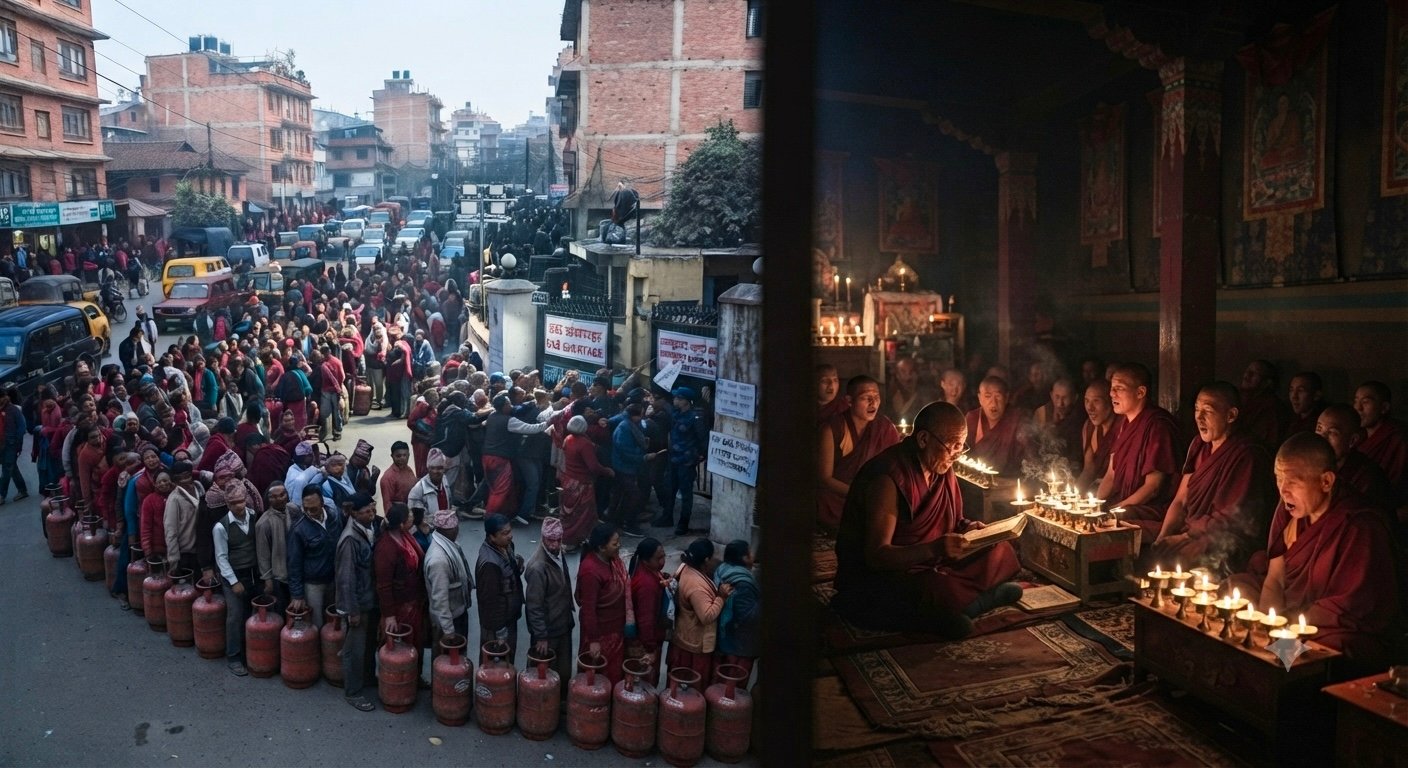
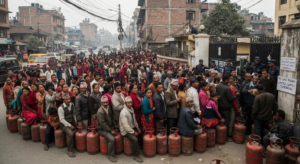
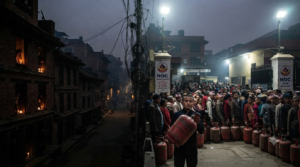
KATHMANDU — Long, snaking queues outside the Nepal Oil Corporation depots have become the defining image of the capital. Residents spent hours under the sun on Monday, desperately trying to secure cooking gas cylinders amid growing fears of severe supply disruptions.
Driven by panic over the escalating global conflict involving the United States, Israel, and Iran, an artificial shortage of Liquefied Petroleum Gas (LPG) has paralyzed households across Nepal. Yet, what began as external geopolitical anxiety has rapidly transformed into a domestic governance crisis, exposing the utter unpreparedness of Prime Minister Balendra “Balen” Shah’s new government.
Empty Promises, Empty Cylinders
For months, the new administration rode a wave of populist fervor, promising revolutionary reforms under a delivery-based governance model. Instead, citizens are waking up to a harsh reality: empty gas cylinders and a crumbling energy grid.
Despite prior warnings regarding regional supply vulnerabilities stemming from the Middle Eastern crisis, the Shah administration failed to establish strategic fuel reserves or secure alternative supply chains. The result is a chaotic scramble where ordinary citizens bear the brunt of administrative negligence, forced to stand in agonizing lines just to cook a basic meal.
Blackouts and the “Induction Stove” Paradox
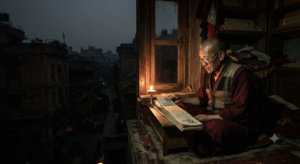
To compound the misery, Kathmandu Valley residents have faced erratic electricity supply and sudden blackouts, rendering alternative cooking methods useless.
Prime Minister Balen Shah recently sparked widespread public confusion and outrage by claiming that if citizens tried to switch to electric induction stoves en masse, the nation’s substations and transformers would “explode” due to weak infrastructure.
Energy experts and everyday citizens have heavily criticized the Prime Minister’s remarks as a gross admission of administrative failure. Critics point out the glaring hypocrisy of a government that fails to support its people while power lines collapse.
“The government tells us to move away from imported gas, but when we face a gas crisis, they leave us in the dark with failing power lines and empty promises,” said a frustrated resident waiting in line at the depot. “Where is the decisive leadership we were promised?”

The daily toll of these blackouts extends far beyond household kitchens, paralyzing safety and connectivity across the city. Our founder Nima Sherpa from the USA shared his firsthand frustration, stating, “I have a video security camera installed in my home in Kathmandu to check on my parents and property, but due to the blackout, the camera goes off again and again. Because of the constant blackouts and lack of reliable internet, I have to call tech support people at least twice or thrice a week just to manage it.”
Public Outrage: Citizens Hit Back at the New Government
The current energy crisis has ignited a wave of intense public criticism directed straight at Prime Minister Balen Shah and his cabinet. Citizens who once held high hopes for his leadership now feel completely abandoned as they navigate a country paralyzed by simultaneous shortages of cooking gas, electricity, and internet connectivity.
1. The “Induction Stove” Paradox: A Betrayed Promise
The most common grievance among the public centers on the government’s contradictory messaging. When the cooking gas shortage began, officials urged citizens to switch to electric induction stoves. However, the reality on the ground is that the city’s power grid cannot handle the increased load, leading to rolling blackouts that render the expensive appliances useless.
In this image, a frustrated resident, Gita Devi, gestures toward her dark, cold kitchen, holding a useless electric appliance next to an empty traditional gas cylinder.
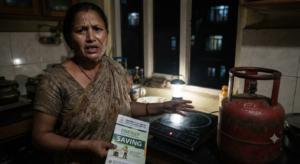
“Balen told us to buy induction stoves because the gas was finished,” Gita Devi told reporters. “Now, the electricity goes off for hours every evening. We cannot cook with gas, and we cannot cook with electricity. My children are going to school hungry. Is this the new leadership we were promised?”
2. The Collapse of Connectivity: “We Are Totally Cut Off”
The crisis extends far beyond basic household needs. The erratic power supply destabilizes local internet infrastructure, grinding the digital economy to a halt.
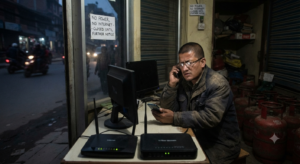
Below, Mr. Rajesh Shrestha, owner of a small cyber cafe and design studio, sits in darkness, unable to work as his shop closes early due to ongoing blackouts and dead communication lines.
A Test the New Government is Failing
The unfolding crisis has severely dented public confidence in Prime Minister Balen Shah’s capability to handle macro-level state crises. As anxiety mounts and patience wears thin across Kathmandu and the rest of the nation, the administration faces mounting pressure to move past rhetoric, stabilize fuel imports, and guarantee steady electricity before public frustration boils over into wider civil unrest.