

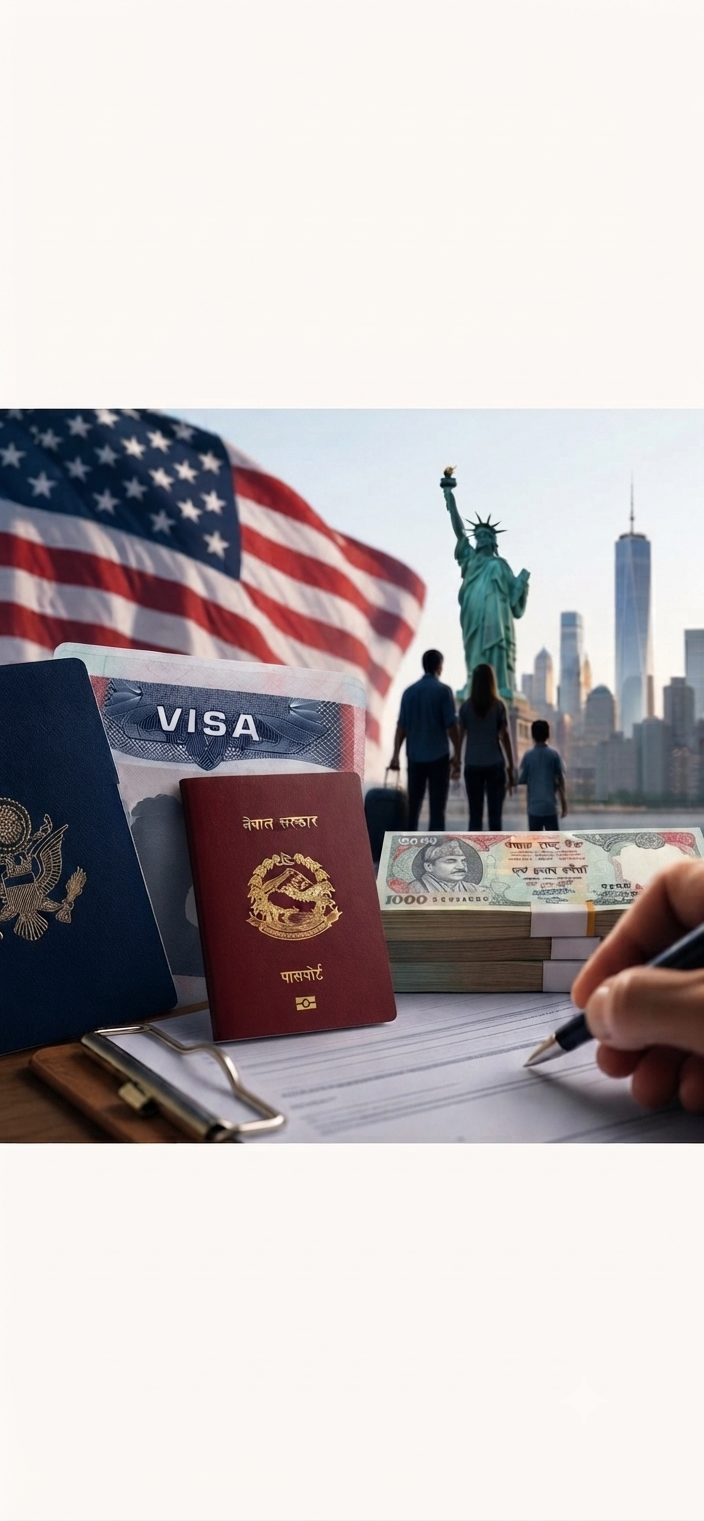
US Tightens Tourist Visa Rules for Nepal Refundable bond up to $20,000
NEW YORK– Nepalis who want to travel to the United States for tourism will now face a new financial rule. Starting August 3, 2026, US consular officers in Kathmandu may ask some B1/B2 visa applicants to pay a refundable bond of $10,000 to $20,000 before their visa is approved.
This rule is now permanent. Nepal is included because it is one of the 50 countries with higher visa overstay rates.
The bond will not be required for everyone. It will only be applied to people the consular officer believes might overstay their visa. Travelers with strong financial ties, stable jobs, and clear travel plans may not be asked to pay the bond.
The bond amounts are $10,000, $15,000, or $20,000. The money will be fully refunded if the traveler returns to Nepal on time and follows all visa rules. But if someone overstays or tries to change their immigration status inside the US, the bond will be lost.
US officials say the rule is meant to reduce overstays. However, during earlier tests, visa approvals dropped sharply, and many Nepalis worry this rule will make US travel harder.
Travel agencies in Kathmandu say many people are confused and worried. Some fear they will qualify for a visa but not be able to afford the bond. Experts advise applicants to prepare strong documents, such as proof of income, employment, family ties, and a clear travel plan.
The US Embassy has not said how many Nepalis will be affected. They say the rule is case‑by‑case, not for everyone.
Nepalis already living in the United States are also reacting strongly. Many say the bond is impossible for families who are barely surviving in expensive American cities.
A Nepali living in New York shared his situation:
“I want to bring my parents to visit us in the USA, but I don’t have bond money to put. We almost survive in New York. We work, pay rent, eat, and that’s it. We can’t save much like before. Everything is expensive now.”
His experience shows how the new rule is making family visits more difficult.
Another voice is Mingma Sherpa from Solukhumbu, who says the bond money would be more useful in Nepal.
“I would rather do business in Nepal with that bond money. After all, we go to the USA and end up driving Uber for $109 a day. It doesn’t worth it.”
Mingma says his brother has been driving Uber in New York for years, and life is much harder than people think.
“My brother told me he can hardly pay his debt in Nepal while driving Uber in New York. Rent is crazy, expenses are high, and savings are almost nothing.”
A Nepali couple in New Jersey also shared their frustration:
“We wanted our parents to see our life here, but how can we afford $20,000? We are already struggling with rent, car payments, and groceries. This rule shuts the door for many of us.”
Voices from Nepal
Sujata Gurung, Pokhara:
“I was planning to visit my cousin in the US next year, but this bond rule changed everything. I can’t even imagine paying $10,000 just to get a visa. That’s more than my yearly income.”
Ramesh Thapa, Kathmandu:
“We work hard here and save little by little. If I had $20,000, I’d open a small business in Nepal instead of giving it to the US Embassy.”
Anita Lama, Dharan:
“It’s unfair. Not everyone wants to stay illegally. Some of us just want to visit family and come back. Why punish everyone for a few overstayers?”
Dipesh Shrestha, Chitwan:
“I was helping my parents prepare documents for a US visit. Now they’re scared. The bond amount is too high — it feels like the US doesn’t want us to come.”
Kiran Rai, Biratnagar:
“Even if the bond is refundable, who has that kind of money lying around? It’s like saying only rich people can travel.”
These reactions show a growing feeling among Nepalis:
If the US requires a $20,000 bond, many would rather invest that money in Nepal instead of struggling abroad.