

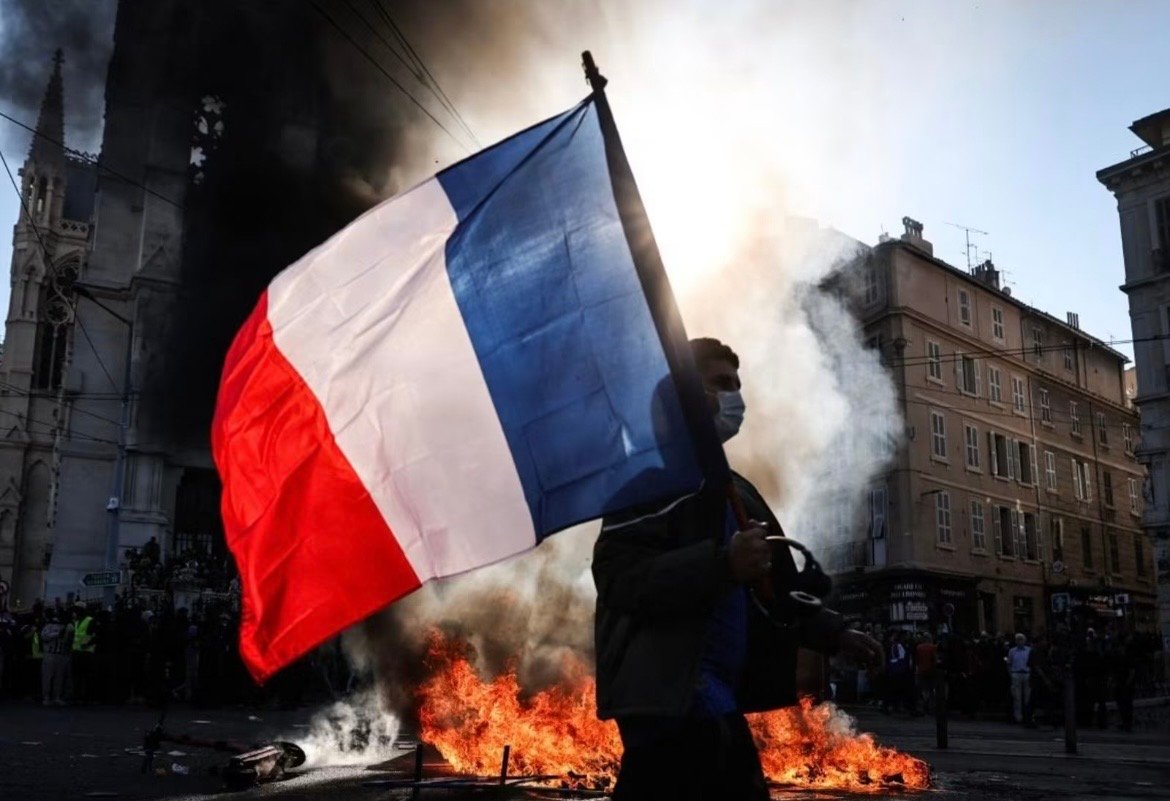
Europe Faces Growing Wave of Protests as Rising Living Costs Fuel Public Anger
Europe is witnessing a fresh wave of public demonstrations as thousands of people take to the streets to express frustration over rising living costs, housing affordability and growing pressure on essential public services.
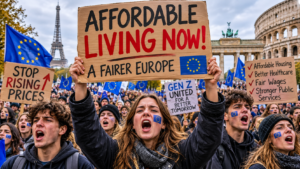
Germany, France, Spain and Italy are among the countries experiencing demonstrations, with younger generations playing an increasingly visible role in mobilizing public opposition. The protests, which gained momentum around Halloween, reflect growing dissatisfaction with economic conditions and government responses to everyday financial challenges.
Rising Living Costs Become a Major Flashpoint
The increasing cost of essential goods and services has become a central concern for demonstrators. Households across Europe are struggling with expenses related to housing, groceries, transportation, electricity and other necessities.
For many young people, financial independence is becoming increasingly difficult. Rising rents, limited employment opportunities and salaries that fail to keep pace with living expenses have intensified concerns about long-term economic security.
Protesters are calling on governments to introduce stronger measures to ease financial pressure on ordinary citizens.
Gen Z Takes a Leading Role
Young people have emerged as a significant force behind the latest demonstrations. Across several European countries, members of Generation Z are using public rallies and social media campaigns to highlight concerns about their economic future.
Their demands extend beyond immediate financial assistance. Many are seeking better employment opportunities, affordable housing, improved education systems and greater government accountability.
The growing involvement of younger demonstrators highlights a broader generational debate about economic inequality and the availability of opportunities for future generations.
Public Services Under Increasing Pressure
Alongside financial concerns, the condition of public services has become another major issue.
Healthcare systems, educational institutions and public transportation networks are facing demands for greater investment and improved accessibility.
Demonstrators argue that essential services should remain affordable, reliable and accessible to everyone, regardless of income.
The protests also reflect wider concerns about whether governments are doing enough to protect living standards and address inequalities.
Governments Face Growing Pressure
The demonstrations present a challenge for European governments already dealing with economic uncertainty, political divisions and competing public spending priorities.
Leaders are facing increasing pressure to demonstrate that their policies can deliver tangible improvements in people’s daily lives.
Potential responses include expanding affordable housing initiatives, improving public infrastructure, supporting lower-income households and strengthening employment opportunities for young people.
However, turning public demands into long-term policy changes could prove difficult, particularly as governments balance social spending with budgetary constraints.
Could the Protests Spread Further?
The latest demonstrations raise questions about whether public frustration could develop into a broader European movement.
Although individual countries have different political and economic circumstances, many protesters share similar concerns about affordability, inequality and the future of public services.
Social media has also made it easier for young activists to exchange ideas, organize demonstrations and draw international attention to domestic issues.
If governments fail to address these concerns, further demonstrations could emerge in additional cities and countries.
A Defining Moment for Europe’s Younger Generation
The growing protests highlight a fundamental question facing Europe: whether economic growth and public policy are delivering meaningful improvements in people’s everyday lives.
For many young Europeans, the traditional promise of education, employment and financial stability appears increasingly difficult to achieve.
The demonstrations are therefore about more than rising prices. They represent a wider demand for economic security, equal opportunities and a better quality of life.
As Europe enters November, governments face an important test: responding to public frustration with meaningful action rather than temporary assurances.
The coming weeks could reveal whether the demonstrations lead to significant policy changes or mark the beginning of a longer period of public unrest across the continent.