

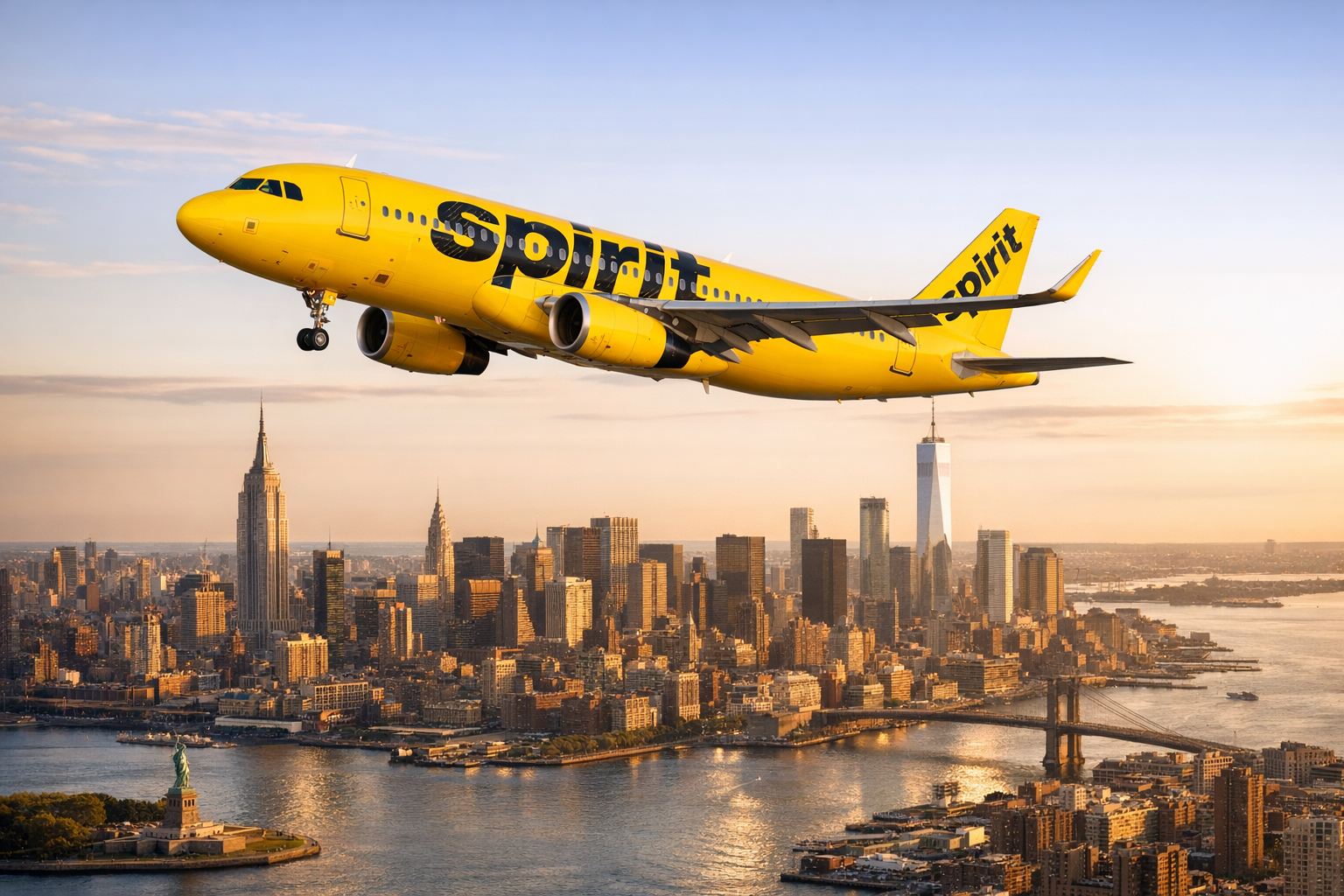
Spirit Airlines shuts down after fuel price surge and failed federal rescue talks
New YORK- Spirit Airlines has officially shut down all operations, marking one of the most dramatic airline failures in recent U.S. aviation history. The ultra‑low‑cost carrier, known for its bright yellow planes and budget‑friendly fares, announced that it could no longer continue flying after a sudden and extreme rise in jet fuel prices pushed the company into a financial dead end.
The shutdown ends Spirit’s 34‑year run and leaves thousands of employees and hundreds of thousands of travelers facing immediate disruption.
A Crisis Months in the Making
Spirit had been struggling for months as fuel prices climbed far beyond the airline’s projections. The company’s financial recovery plan assumed fuel costs would remain relatively stable, but global tensions and supply disruptions caused prices to spike to levels the airline could not absorb. As an ultra‑low‑cost carrier, Spirit operated on razor‑thin margins, leaving little room to handle unexpected cost shocks.
Executives warned internally that the airline was running out of time. By early spring, Spirit began exploring emergency options, including government assistance.
Failed Negotiations With the White House
In a last‑ditch effort to survive, Spirit approached the White House last month seeking financial support. According to the airline, initial conversations with President Donald Trump’s administration appeared encouraging. Spirit hoped that federal assistance, combined with concessions from creditors, could provide the liquidity needed to stay afloat.
However, by Friday, it became clear that the talks had collapsed. Negotiations between Spirit, its bondholders, and federal officials broke down, leaving the airline without a path forward.
Spirit President and CEO Dave Davis said the company simply could not secure the massive amount of funding required to continue operating.
He explained that keeping the airline alive would have required hundreds of millions of dollars in additional liquidity, money the company could not obtain from any source.
Davis called the shutdown “tremendously disappointing” and emphasized that it was not the outcome anyone at the company wanted.
Flights Grounded and Passengers Stranded
When the shutdown took effect, no Spirit aircraft were in the air, but the impact on travelers was immediate and widespread.
Passengers with upcoming flights were urged not to go to the airport, as all operations had ceased without a transition period.
Spirit launched a dedicated shutdown website directing customers to refund information and travel guidance. The airline confirmed that:
• Automatic refunds will be issued for tickets purchased directly through Spirit using a credit or debit card.
• Passengers who booked through travel agencies must request refunds from their agents.
• Additional expenses, such as hotel stays, meals, or alternative travel arrangements, will not be reimbursed unless covered by a traveler’s insurance policy.
This left many travelers scrambling to find last‑minute accommodations or replacement flights, often at significantly higher prices.
Thousands of Employees Affected
The shutdown also delivers a heavy blow to Spirit’s workforce. More than 15,000 employees including pilots, flight attendants, mechanics, and customer service staff now face sudden job uncertainty. Many had been hopeful that the airline’s restructuring efforts would succeed, but the fuel crisis accelerated the collapse beyond recovery.
Airports in Florida, Las Vegas, Atlantic City, and other major Spirit hubs are expected to see major operational shifts as competing airlines adjust to the sudden disappearance of a major budget carrier.
Industry Impact and What Comes Next
Spirit’s collapse is expected to reshape the U.S. airline market. The carrier played a major role in keeping fares low on many domestic routes, forcing larger airlines to compete aggressively on price. With Spirit gone, analysts warn that:
• Airfares may rise on routes where Spirit once offered the lowest prices.
• Other low‑cost carriers may struggle if fuel prices remain volatile.
• Travelers who relied on Spirit for affordable travel options will have fewer choices.
The shutdown also raises broader questions about the vulnerability of ultra‑low‑cost airlines during periods of economic instability and global fuel market disruptions.
A Sudden End to a Distinctive Airline
Founded in 1992, Spirit Airlines grew from a small regional carrier into one of the largest low‑fare airlines in the United States. Its bright yellow planes, à‑la‑carte pricing model, and aggressive expansion strategy made it a recognizable if sometimes controversial player in the industry.
Its abrupt shutdown marks the end of an era for budget air travel in America.