

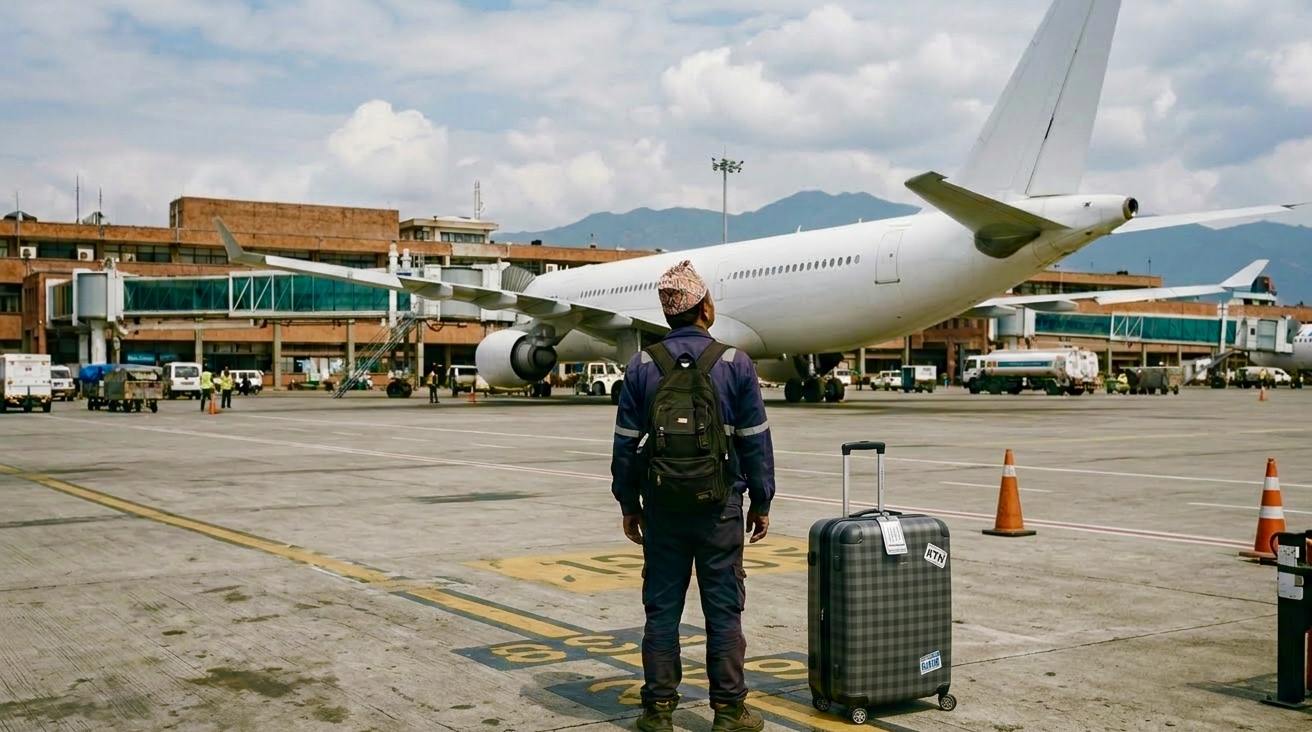
Nepal faces mounting economic risks amid escalating Gulf conflict
KATHMANDU — Escalating tensions between Iran and several Gulf nations are creating growing anxiety in Nepal, where millions of families depend on foreign employment for income and stability. As missile and drone attacks continue across the region, Nepali migrant workers — the backbone of the country’s remittance economy — are facing heightened risks, travel disruptions, and an uncertain future.
Nepal has long relied on labour migration to the Gulf, with more than a million citizens working in Saudi Arabia, the United Arab Emirates, Qatar, Kuwait, Bahrain, and Oman. These workers send home billions of rupees each year, supporting households, paying off loans, and sustaining local economies. Any instability in the Gulf region immediately affects Nepal’s social and economic landscape.
Fatal Attack Raises Alarm Across Nepal
Public concern intensified after a Nepali worker was killed during a drone strike at a major airport in the United Arab Emirates. The incident spread quickly through social media, prompting families across Nepal to contact relatives working in the Gulf to confirm their safety.
In Gorkha district, relatives of the deceased worker said they had been glued to their phones for hours, refreshing news updates and waiting for official confirmation. “We heard there was an attack near the airport. We kept calling him, but the phone didn’t ring,” a family member said. “We never imagined the conflict would reach the place where he worked.”
The tragedy has heightened fears that Nepali workers — many of whom work in airports, construction sites, oil facilities, and transport hubs — could be caught in future attacks.
Thousands of Workers Stranded as Departures Slow
At Kathmandu’s Tribhuvan International Airport, long lines of migrant workers have formed in recent days as flights to Gulf destinations face delays or cancellations. Many workers who had secured jobs after months of preparation are now stranded, unsure when they will be able to travel.
Recruitment agencies say the number of daily departures has dropped sharply. Some employers in the Gulf have temporarily postponed new hires, citing security concerns and operational disruptions.
For many Nepali families, the delays are financially devastating. Workers often take loans ranging from NPR 150,000 to NPR 400,000 to pay for recruitment fees, medical tests, training, and travel. These loans are usually repaid only after the worker begins earning abroad.
“When my son’s flight was cancelled, we didn’t know what to do,” said a mother from Kathmandu. “We borrowed money expecting he would start earning immediately. Now we are stuck with interest payments and no income.”
Remittance Flow Faces Potential Decline
Remittances account for more than a quarter of Nepal’s GDP, making the country one of the most remittance‑dependent economies in the world. Economists warn that prolonged instability in the Gulf could reduce the flow of money sent home, affecting everything from household spending to national revenue.
A decline in remittances would hit rural communities hardest, where foreign employment is often the primary source of income. Local businesses — from grocery shops to transport services — also depend on remittance‑driven spending.
“If departures continue to slow and workers abroad face reduced hours or safety restrictions, Nepal will feel the impact within months,” said an economic analyst in Kathmandu. “Remittances are not just income for families; they are a stabilizing force for the entire economy.”
Safety Alerts and Restricted Movement in the Gulf
As tensions escalate, Nepali embassies in the Gulf have issued advisories urging workers to follow local safety instructions, avoid unnecessary travel, and stay in contact with employers. Some companies have temporarily restricted outdoor work or relocated employees to safer areas.
Workers in Saudi Arabia and the UAE report increased security checks, limited access to certain zones, and warnings to avoid crowded public places. In Qatar and Kuwait, some construction sites have adjusted working hours due to security concerns.
Despite the risks, many Nepali workers say they cannot afford to return home. “We came here to support our families,” said a Nepali worker in Riyadh. “Even if the situation is tense, going back means losing our income.”
Rising Fuel Prices Add Pressure at Home
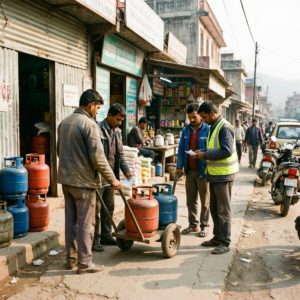
The conflict has also contributed to rising global fuel prices, which have begun to affect Nepal’s domestic market. Higher transportation costs are pushing up the price of essential goods, adding pressure on households already struggling with inflation.
Transport operators warn that if fuel prices continue to rise, fares may increase, affecting daily commuters and small businesses.
Government Monitoring the Situation
Nepal’s Ministry of Labour, Employment and Social Security says it is closely monitoring developments in the Gulf and coordinating with embassies to ensure the safety of Nepali workers. Officials say contingency plans are being discussed in case evacuation or emergency assistance becomes necessary.
However, labour experts argue that Nepal needs a long‑term strategy to reduce its dependence on foreign employment and protect workers during international crises.
Uncertain Road Ahead
If the conflict expands or continues for an extended period, Nepal may face:
• A decline in remittance inflows
• Increased unemployment among returning workers
• Higher household expenses due to rising fuel and commodity prices
• Delays in new labour approvals and departures
• Greater risk for Nepalis working near conflict‑exposed areas
• Pressure on government resources for emergency support
For now, families across Nepal remain anxious, hoping the situation stabilizes before more lives and livelihoods are affected. As the conflict unfolds thousands of miles away, its consequences are being felt deeply in Nepali homes, villages, and markets — a reminder of how closely Nepal’s future is tied to the stability of the Gulf region.