


7 Nepalis detained in Gulf countries for sharing war‑linked videos
UAE– Seven Nepali nationals working in the Persian Gulf have been detained for sharing war‑related and unverified videos on social media, according to officials from Nepal’s Ministry of Foreign Affairs. The arrests took place in the United Arab Emirates, Saudi Arabia, and Kuwait, where authorities have tightened monitoring of online activity due to rising regional tensions.
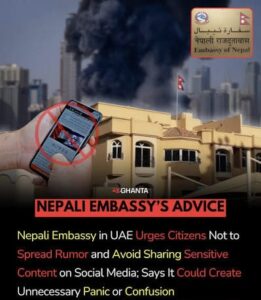
Officials say the individuals posted or forwarded videos linked to ongoing conflicts without verifying their authenticity. Local laws in many Gulf countries treat the spread of misleading or sensitive content as a security concern, and violations can result in arrest, heavy fines, or imprisonment. In the UAE, for example, penalties for sharing false or harmful information can include one to two years in jail.
Nepal’s embassies in the region had previously issued warnings urging migrant workers not to share political, military, or conflict‑related content online. Despite these advisories, several Nepalis were detained after authorities traced the circulation of sensitive videos back to their social media accounts.
Government officials in Kathmandu say they are monitoring the situation and coordinating with local embassies, but they also acknowledge that resolving such cases can be challenging due to strict cybercrime laws in Gulf nations.
A Warning for Nepalis Abroad
Authorities are reminding Nepalis working overseas—especially in the Gulf to be extremely cautious about what they post or forward online. Sharing unverified, political, or war‑related videos can lead to serious legal consequences, even if the content was forwarded unintentionally.
Workers are advised to:
• Avoid sharing conflict‑related videos or news unless it comes from verified sources
• Refrain from posting political opinions related to the host country or neighboring nations
• Follow local digital‑safety laws to protect themselves from legal trouble
Officials emphasize that a single social media post can have severe consequences in countries with strict cybercrime regulations.